Schizophrenia is a chronic mental health disorder characterized by disruptions in thought processes, perceptions, emotional responsiveness, and social interactions. People with schizophrenia often seem like they have lost touch with reality, experiencing symptoms such as hallucinations, delusions, and disorganized thinking.
It’s important to recognize that schizophrenia is not a split or multiple personality disorder, as is often incorrectly believed. Instead, it’s a condition that involves disturbances in a person’s perception of reality.
Symptoms of Schizophrenia
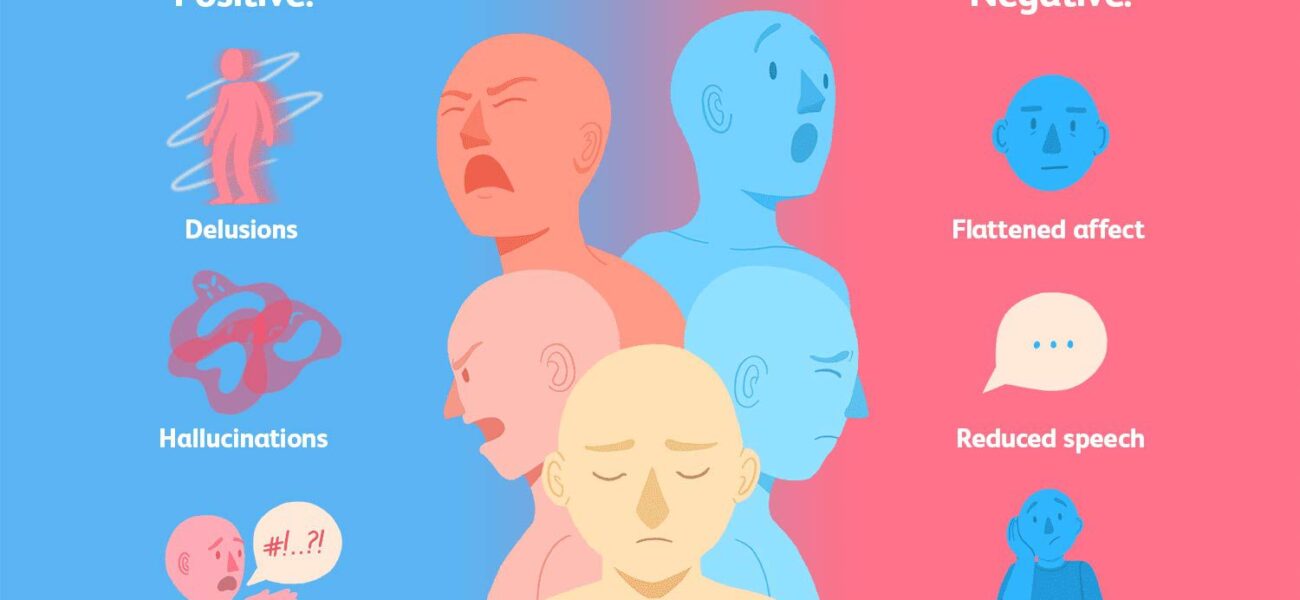
Schizophrenia symptoms are typically divided into three categories: positive, negative, and cognitive symptoms.
Positive Symptoms
These are symptoms that add behaviors not seen in healthy individuals:
- Hallucinations: Hearing, seeing, or feeling things that are not there (most commonly hearing voices).
- Delusions: Strongly held false beliefs not based in reality (such as believing one has special powers or is being persecuted).
- Thought disorders: Unusual or dysfunctional ways of thinking.
- Movement disorders: Agitated body movements or, conversely, lack of movement.
Negative Symptoms
These reflect a decrease or loss of normal abilities:
- Reduced expression of emotions (flat affect)
- Lack of motivation or initiative
- Withdrawal from social activities
- Difficulty finding pleasure in everyday life
Cognitive Symptoms
These affect memory and thinking skills:
- Poor executive functioning (trouble understanding information and using it)
- Difficulty focusing or paying attention
- Problems with working memory (difficulty remembering recently learned information)
The severity and combination of symptoms can vary greatly among individuals.
Causes and Risk Factors
The exact cause of schizophrenia remains unknown, but research suggests a combination of genetic, brain chemistry, and environmental factors:
- Genetics: Having a family member with schizophrenia increases risk, but most people with a family history do not develop the illness.
- Brain structure and neurotransmitters: Imbalances in brain chemicals like dopamine and glutamate, as well as abnormalities in brain structure, are linked to schizophrenia.
- Environmental factors: Exposure to viruses, malnutrition before birth, psychosocial factors, or stressful life circumstances may trigger schizophrenia in people who are predisposed.
Diagnosing Schizophrenia
Diagnosing schizophrenia involves a thorough psychiatric evaluation, including:
- Observation of behavior and symptoms
- Discussion of medical and mental health history
- Use of standardized assessment tools
- Ruling out other mental health disorders, medical conditions, or substance abuse that might cause similar symptoms
According to diagnostic criteria, symptoms must persist for at least six months and significantly impair functioning.
Treatment Options
Although there is no cure for schizophrenia, many people can manage their symptoms effectively through a combination of treatments:
- Medications: Antipsychotic drugs are the cornerstone of treatment. They help manage positive symptoms like hallucinations and delusions.
- Therapy: Cognitive-behavioral therapy (CBT), individual psychotherapy, and family therapy can be crucial in teaching coping strategies and improving relationships.
- Rehabilitation programs: Focused on social skills, job training, and housing support to help individuals live independently.
- Hospitalization: In cases of severe symptoms, hospitalization may be necessary to ensure safety and stability.
A treatment plan often needs to be tailored to the individual’s needs and adjusted over time.
Living with Schizophrenia
Managing schizophrenia is a lifelong process. However, with the right treatment and support, many individuals are able to lead meaningful, productive lives.
Key strategies include:
- Sticking to the prescribed treatment plan
- Building a strong support network of family, friends, and healthcare providers
- Avoiding drugs and alcohol, which can worsen symptoms
- Recognizing early warning signs of a relapse and seeking help promptly
- Engaging in meaningful activities that provide a sense of purpose and routine
Education is crucial—not only for individuals with schizophrenia but also for their families and communities—to create a supportive environment that fosters recovery and understanding.
Breaking the Stigma
Despite growing awareness, misconceptions about schizophrenia persist. People living with this disorder are often unfairly judged or feared. In reality, most individuals with schizophrenia are not violent and are more likely to be victims of violence than perpetrators.
Breaking down stigma involves:
- Encouraging open conversations about mental health
- Promoting empathy and understanding
- Supporting mental health initiatives and research
Final Thoughts
Schizophrenia is a challenging but manageable mental health condition. Through early diagnosis, consistent treatment, supportive care, and societal understanding, individuals with schizophrenia can lead fulfilling lives.
By educating ourselves and others, we can replace fear with compassion and misunderstanding with support—creating a world where mental health is treated with the dignity it deserves.
If you or someone you know may be experiencing symptoms of schizophrenia, reaching out to a mental health professional is an essential first step. Help is available, and hope is real.
The list of some Schizophrenia medicine:
Sperid
Risperdex
Risdon
Riscord
Residon
Resco
Frenia
Modesto XR
Sizonil
Ariprazole
Queta
Queta XR
Renapine
Renapine XR
Queptam
Q-Fit XR
Q-Fit
Quiet
Quiet XR
Flupagen
Fenazine
Tardivex
Ariprex
Aripra
ZOLERIP
SAYFREN
IGNIS
ARIPA