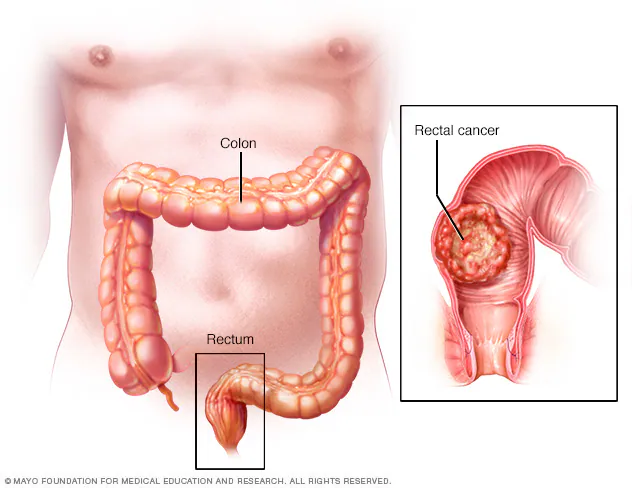
Rectum cancer refers to cancer that develops in the rectum — the last portion of the large intestine that connects the colon to the anus. It plays a crucial role in storing stool until it is expelled from the body. Cancer in this area is a type of colorectal cancer and often shares many similarities with colon cancer, but its location brings unique challenges for treatment.
Causes and Risk Factors
Rectum cancer typically begins when healthy cells in the rectum develop mutations in their DNA, causing them to grow uncontrollably and form tumors. While the exact cause of these mutations isn’t always clear, several risk factors are known to increase the likelihood of developing rectal cancer:
- Age: Most cases occur in people over 50.
- Family History: Having a close relative with colorectal cancer raises the risk.
- Diet: Diets high in red or processed meats can contribute.
- Inflammatory Bowel Disease: Conditions like ulcerative colitis and Crohn’s disease elevate the risk.
- Lifestyle Factors: Smoking, obesity, and lack of physical activity can increase risk.
- Genetic Syndromes: Inherited conditions like Lynch syndrome and familial adenomatous polyposis (FAP) significantly raise the chance of developing rectal cancer.
Symptoms
The symptoms of rectum cancer may not be obvious in its early stages, but as the disease progresses, signs can include:
- Changes in bowel habits, such as diarrhea, constipation, or feeling that the bowel does not empty completely.
- Rectal bleeding or blood in the stool.
- Persistent abdominal discomfort, like cramps or pain.
- Weakness or fatigue.
- Unexplained weight loss.
- Narrow stools (a noticeable change in the shape of the stool).
It’s important to note that these symptoms can also be caused by conditions other than cancer, but they should not be ignored.
Diagnosis
Early detection of rectum cancer greatly improves treatment outcomes. Diagnostic steps may include:
- Colonoscopy: A flexible tube with a camera is used to view the inside of the colon and rectum.
- Biopsy: A tissue sample is taken during a colonoscopy and analyzed for cancer cells.
- Imaging Tests: CT scans, MRI, and PET scans help determine if the cancer has spread and to plan treatment.
- Blood Tests: Tests like the carcinoembryonic antigen (CEA) blood test may be used to monitor cancer progression.
Staging
The stage of rectum cancer describes how far the cancer has spread:
- Stage 0: Cancer is only in the inner lining of the rectum.
- Stage I: Cancer has grown into deeper layers but has not spread outside the rectum.
- Stage II: Cancer has grown through the rectal wall but hasn’t reached nearby lymph nodes.
- Stage III: Cancer has spread to nearby lymph nodes.
- Stage IV: Cancer has spread to distant organs such as the liver or lungs.
Treatment Options
Treatment plans are tailored based on the cancer’s stage, location, and the patient’s overall health. Options include:
- Surgery: The most common treatment, aiming to remove the tumor. Procedures may range from local excision to more extensive operations like a low anterior resection or abdominoperineal resection.
- Radiation Therapy: Often used before surgery to shrink tumors or after surgery to kill remaining cancer cells.
- Chemotherapy: Drugs used to destroy cancer cells, often combined with radiation or used if cancer has spread.
- Targeted Therapy: Focuses on specific weaknesses within cancer cells.
- Immunotherapy: Helps the immune system recognize and destroy cancer cells (mainly for advanced cases).
Sometimes a combination of these treatments is used for the best results.
Prevention
Although not all cases of rectum cancer can be prevented, certain measures can lower your risk:
- Eat a healthy diet rich in fruits, vegetables, and whole grains.
- Limit red and processed meats.
- Stay physically active and maintain a healthy weight.
- Avoid smoking and limit alcohol intake.
- Get regular screenings, especially if you are over 45 or have a family history of colorectal cancer.
Conclusion
Rectum cancer is a serious condition, but early detection and advances in treatment have significantly improved survival rates. Being aware of the symptoms, risk factors, and the importance of regular screenings can make a big difference. A proactive approach to health, including lifestyle changes and timely medical check-ups, remains the best defense against rectal cancer.
The list of some Rectum Cancer medicine:
Fluroxan
lrinox
Xaloplat Aqua
Oxaliplat
Flurotor
Vectobix Injection
Oxator
VECTIBIX
OXATU-S
OXALPIN
IRINOCAM
IRINOCAM
IRITEC
OXALIDEM