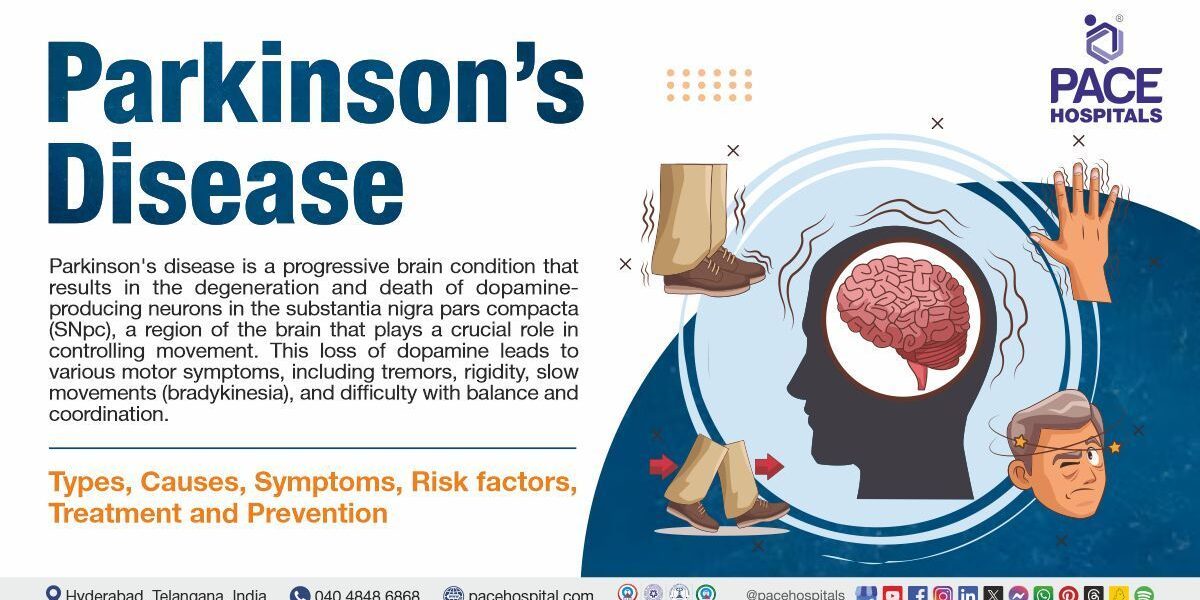
Parkinson’s disease is a progressive neurological disorder that primarily affects movement. It occurs when nerve cells in a specific part of the brain, known as the substantia nigra, become damaged or die. These cells are responsible for producing dopamine, a chemical that plays a key role in coordinating movement. As dopamine levels decrease, it becomes increasingly difficult for the brain to control muscle movement, leading to the characteristic symptoms of Parkinson’s.
Though Parkinson’s disease is most common in older adults, particularly those over the age of 60, younger people can also develop it—a condition known as young-onset Parkinson’s.
What Causes Parkinson’s Disease?
The exact cause of Parkinson’s disease remains unclear. However, researchers believe that a combination of genetic and environmental factors contributes to its development. Some possible factors include:
- Genetic mutations: Although rare, certain inherited genetic mutations can increase the risk.
- Environmental triggers: Exposure to certain toxins, such as pesticides and herbicides, has been linked to a higher risk.
- Age: The risk of developing Parkinson’s increases with age.
- Gender: Men are slightly more likely than women to develop the disease.
- Family history: Having close relatives with Parkinson’s can slightly raise your risk.
Symptoms of Parkinson’s Disease
Parkinson’s symptoms often develop gradually and may vary from person to person. The most common symptoms include:
- Tremors: Shaking, often beginning in the hands or fingers, especially when at rest.
- Bradykinesia: Slowness of movement, making everyday tasks more difficult and time-consuming.
- Muscle rigidity: Stiffness in the limbs and trunk, leading to reduced range of motion and pain.
- Postural instability: Problems with balance and coordination, increasing the risk of falls.
- Speech changes: Speaking softly, quickly, or with slurred speech.
- Writing changes: Handwriting may become smaller and more cramped.
Non-motor symptoms are also common and can include depression, anxiety, memory issues, sleep disturbances, and loss of the sense of smell.
How is Parkinson’s Disease Diagnosed?
There is no definitive test for Parkinson’s disease. Diagnosis is primarily based on:
- Medical history
- A review of symptoms
- A neurological and physical examination
In some cases, doctors may use brain imaging, like MRI or PET scans, to rule out other conditions. Response to Parkinson’s medication can also help confirm the diagnosis.
Treatment Options
While there is currently no cure for Parkinson’s disease, several treatments can help manage its symptoms and improve quality of life. Common treatment strategies include:
Medications
- Levodopa: The most effective medication, it converts to dopamine in the brain to help control movement.
- Dopamine agonists: These mimic dopamine effects in the brain.
- MAO-B inhibitors: Help prevent the breakdown of dopamine in the brain.
- COMT inhibitors: Extend the effects of levodopa by blocking an enzyme that breaks it down.
Surgical Options
- Deep Brain Stimulation (DBS): Involves implanting electrodes into specific parts of the brain to reduce symptoms. It is typically used for patients whose symptoms are not well controlled with medication.
Lifestyle and Supportive Therapies
- Physical therapy: Improves mobility, flexibility, and balance.
- Occupational therapy: Helps maintain independence in daily activities.
- Speech therapy: Assists with voice and swallowing problems.
- Healthy lifestyle: A balanced diet and regular exercise can help manage symptoms and improve overall well-being.
Living with Parkinson’s Disease
Living with Parkinson’s requires adjustments but it is possible to maintain a good quality of life. Key aspects include:
- Staying active and engaged with hobbies
- Seeking emotional support from family, friends, or support groups
- Following treatment plans and attending regular doctor visits
- Being proactive about mental health to address depression or anxiety
Ongoing research continues to offer hope for new treatments, and many patients live long and fulfilling lives with proper management.
Conclusion
Parkinson’s disease is a challenging condition, but early diagnosis, proper treatment, and a strong support system can make a significant difference. With advances in research, there is growing optimism for better therapies—and one day, even a cure. Awareness and education are powerful tools for supporting those affected by this complex disorder.