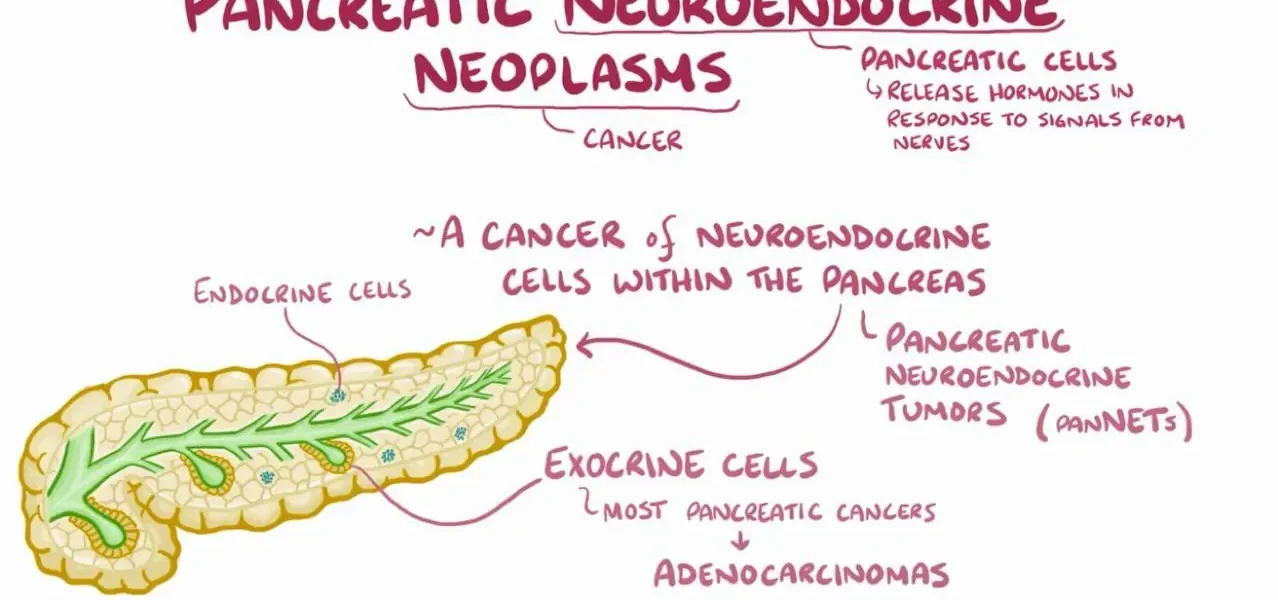
When we think of pancreatic cancer, most people envision the aggressive form known as pancreatic adenocarcinoma. However, there is another, less common type—Pancreatic Neuroendocrine Tumors (PanNETs)—which arises from a different kind of cell and behaves differently. Although rare, awareness about PanNETs is crucial for timely diagnosis and treatment.
PanNETs develop in the hormone-producing cells (called neuroendocrine cells) of the pancreas. Unlike the exocrine cells responsible for digestive enzymes, neuroendocrine cells help regulate hormones like insulin and glucagon, which manage blood sugar levels.
These tumors can be benign or malignant and may grow slowly or aggressively, depending on their type and grade. They are also known as islet cell tumors and account for only about 5-10% of all pancreatic tumors.
Types of PanNETs
PanNETs are categorized based on whether they produce hormones that cause symptoms:
1. Functioning Tumors
These tumors produce excessive amounts of hormones, often leading to noticeable symptoms:
- Insulinomas (produce insulin) – may cause low blood sugar
- Gastrinomas (produce gastrin) – may cause ulcers (Zollinger-Ellison syndrome)
- Glucagonomas (produce glucagon) – may cause high blood sugar and skin rashes
- VIPomas (produce vasoactive intestinal peptide) – may cause watery diarrhea
- Somatostatinomas (produce somatostatin) – may cause diabetes and gallstones
2. Non-Functioning Tumors
These do not secrete active hormones or cause symptoms until they grow large enough to press on nearby structures, making them harder to detect early.
Causes and Risk Factors
While the exact cause of PanNETs remains unclear, certain conditions and genetic syndromes can increase the risk:
- Multiple Endocrine Neoplasia type 1 (MEN1)
- Von Hippel-Lindau disease
- Tuberous sclerosis complex
- Neurofibromatosis type 1
Other factors like chronic pancreatitis and family history of pancreatic tumors may also contribute, although more research is needed.
Symptoms of PanNETs
Symptoms vary depending on whether the tumor is functioning or non-functioning. Common symptoms may include:
- Abdominal pain
- Unexplained weight loss
- Nausea or vomiting
- Jaundice (yellowing of the skin and eyes)
- Low or high blood sugar
- Frequent ulcers or digestive issues
Because these symptoms are often vague or attributed to other conditions, PanNETs are frequently diagnosed late.
How Are PanNETs Diagnosed?
Early diagnosis involves a combination of imaging tests and laboratory evaluations:
- Blood and urine tests: Measure hormone levels and detect tumor markers like chromogranin A.
- Imaging: CT scans, MRI, or specialized scans like octreotide or PET scans help locate and assess the tumor.
- Biopsy: A tissue sample confirms the tumor type and helps grade its aggressiveness.
Treatment Options
Treatment strategies depend on tumor size, location, hormone production, and whether the cancer has spread:
Surgery
- Surgery is often the first choice for localized tumors and may involve removal of part or all of the pancreas.
Medications
- Somatostatin analogs (e.g., octreotide or lanreotide) control hormone-related symptoms.
- Targeted therapies (e.g., everolimus or sunitinib) slow tumor growth.
- Chemotherapy: Reserved for more aggressive or widespread tumors.
Peptide Receptor Radionuclide Therapy (PRRT)
- A newer treatment that delivers radiation directly to tumor cells via targeted molecules.
Active Surveillance
- In cases of slow-growing tumors with no symptoms, doctors may recommend regular monitoring instead of immediate treatment.
Prognosis and Outlook
Compared to other types of pancreatic cancer, PanNETs often have a better prognosis, especially when detected early. The 5-year survival rate varies widely depending on whether the tumor is localized or has spread, and how aggressive it is.
Conclusion
Pancreatic Neuroendocrine Tumors may be rare, but early recognition can significantly improve outcomes. With advancing medical technologies and targeted therapies, there is growing hope for patients diagnosed with PanNETs. If you experience unexplained symptoms or have a family history of neuroendocrine tumors, consult a healthcare provider for screening and guidance.
The list of some Pancreatic Neuroendocrine Tumors (PanNETs) medicine:
Lucibelzu
Welidx