Menopause marks a significant phase in a woman’s life, signaling the end of her reproductive years. It is a natural biological process that typically occurs between the ages of 45 and 55, though the timing can vary. While menopause is a normal part of aging, the physical and emotional symptoms it brings can sometimes feel overwhelming.
What Is Menopause?
Menopause is defined as the point when a woman has not had a menstrual period for twelve consecutive months, without pregnancy or illness being the cause. This happens because the ovaries gradually produce less estrogen and progesterone — the hormones responsible for regulating menstruation and fertility.
The process leading up to menopause, called perimenopause, can last several years and is characterized by irregular periods and various symptoms due to fluctuating hormone levels.
Stages of Menopause
Menopause unfolds in three stages:
1. Perimenopause
- Begins several years before menopause.
- Hormone levels start to fluctuate, causing irregular periods and early symptoms like hot flashes and mood swings.
- Fertility declines, but pregnancy is still possible during this phase.
2. Menopause
- Officially starts when a woman has gone 12 months without a menstrual period.
- Ovaries significantly reduce hormone production.
- Symptoms like night sweats, vaginal dryness, and sleep problems often intensify.
3. Postmenopause
- The years following menopause.
- Symptoms may ease for some, but the lower hormone levels can increase the risk of health problems such as osteoporosis and heart disease.
Common Symptoms of Menopause
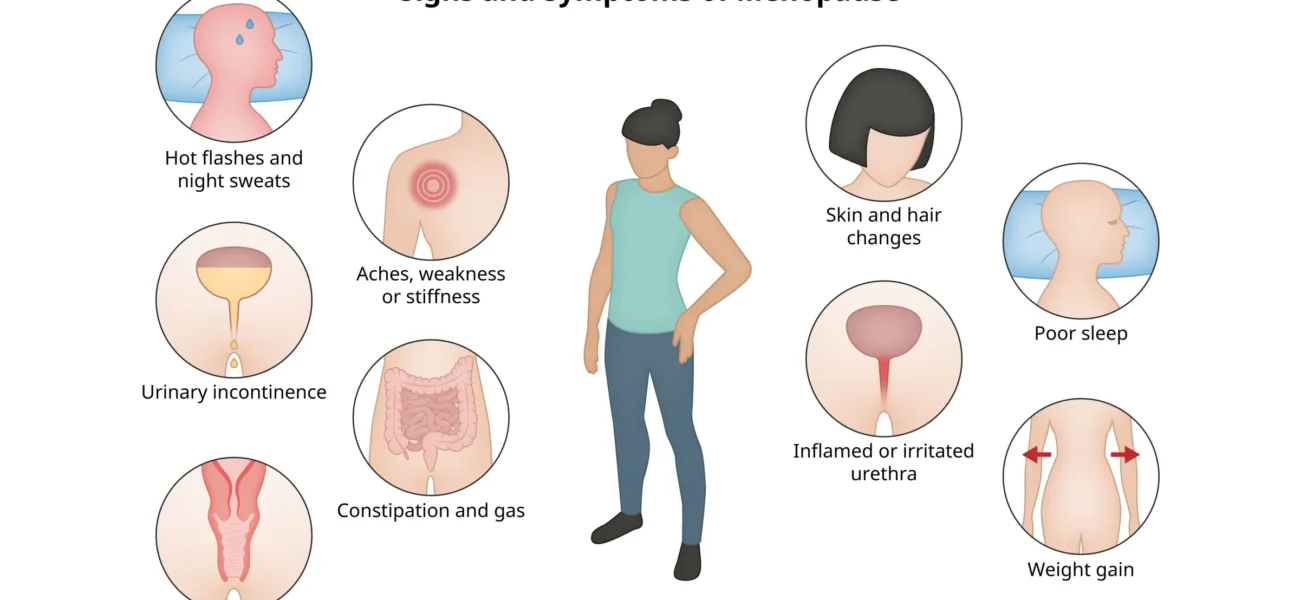
While experiences vary, many women report a combination of physical and emotional symptoms, including:
- Hot flashes and night sweats
- Sleep disturbances and insomnia
- Mood swings, irritability, and anxiety
- Vaginal dryness and discomfort during intercourse
- Decreased libido (sexual drive)
- Weight gain, particularly around the abdomen
- Thinning hair and dry skin
- Memory problems and difficulty concentrating
These symptoms can range from mild to severe and may affect daily life.
Causes and Risk Factors
The primary cause of menopause is the natural decline of reproductive hormones. However, some factors can lead to early menopause, such as:
- Surgical removal of the ovaries (oophorectomy)
- Chemotherapy or radiation therapy
- Genetic factors (family history of early menopause)
- Autoimmune diseases
- Smoking, which can hasten menopause by a few years
Diagnosis
Doctors usually diagnose menopause based on symptoms and medical history. In some cases, blood tests to measure hormone levels, like follicle-stimulating hormone (FSH) and estrogen, may be performed to confirm the diagnosis, especially if menopause occurs earlier than expected.
Management and Treatment Options
While menopause itself does not require treatment, its symptoms can often be managed through various strategies:
1. Lifestyle Adjustments
- Eating a balanced diet rich in calcium and vitamin D.
- Engaging in regular physical activity to support heart and bone health.
- Practicing stress-reducing techniques like yoga or meditation.
- Avoiding hot flash triggers such as spicy foods, caffeine, and alcohol.
2. Hormone Replacement Therapy (HRT)
- HRT involves taking estrogen or a combination of estrogen and progesterone to ease symptoms.
- It can be highly effective but may not be suitable for everyone due to potential risks like blood clots and certain cancers.
3. Non-Hormonal Medications
- Antidepressants, blood pressure medications, and other drugs can help relieve hot flashes and mood swings for those who cannot take hormones.
4. Vaginal Estrogen
- Available in creams, tablets, or rings to relieve vaginal dryness and discomfort.
5. Alternative Therapies
- Some women find relief with herbal remedies like black cohosh or soy products, but scientific evidence on their effectiveness is mixed.
- Always consult a healthcare provider before trying alternative treatments.
Long-Term Health After Menopause
Postmenopausal women face an increased risk for certain health issues, including:
- Osteoporosis: Weaker bones due to reduced estrogen levels.
- Cardiovascular disease: Higher risk of heart attacks and strokes.
- Urinary problems: Increased likelihood of urinary incontinence and infections.
Regular health check-ups, a healthy lifestyle, and preventive care are essential during this stage of life.
Final Thoughts
Menopause is a natural transition, not a medical condition. While it can bring uncomfortable symptoms, understanding the changes happening in your body and knowing how to manage them can make this period smoother and healthier. If symptoms are particularly troublesome, seeking advice from a healthcare professional can help create a personalized plan for managing menopause and enjoying this new chapter of life.
The list of some Menopause medicine:
Rozy
Rozy DS
Oestrogel
Gynova
Activelle