Hemorrhagic cystitis is a painful and potentially serious condition that involves inflammation of the bladder lining accompanied by bleeding. While it may sound alarming, understanding the underlying causes, symptoms, and available treatments can help in managing and even preventing this condition effectively.
Although it can occur in individuals of any age, it is more commonly associated with specific medical treatments or infections that irritate the bladder wall.
Hemorrhagic cystitis (HC) is a form of bladder inflammation that leads to blood in the urine (hematuria) and symptoms similar to those of a urinary tract infection. It ranges from mild cases with microscopic blood in the urine to severe cases with significant bleeding and clots.
The condition can be acute or chronic, and its severity can vary depending on the underlying cause.
What Causes Hemorrhagic Cystitis?
There are several causes of hemorrhagic cystitis, with some of the most common including:
- Chemotherapy: Drugs like cyclophosphamide and ifosfamide are well-known to irritate the bladder lining, often requiring preventive measures during cancer treatment.
- Radiation therapy: Especially when directed at the pelvis, radiation can damage the bladder tissue over time, leading to late-onset hemorrhagic cystitis.
- Viral infections: Certain viruses, such as adenovirus and BK virus, can trigger the condition, particularly in immunocompromised patients such as those undergoing stem cell or organ transplants.
- Bacterial infections: Though less common, severe bacterial UTIs may also lead to hemorrhagic cystitis in some individuals.
- Medications and toxins: Some drugs or exposure to chemicals can irritate the bladder lining.
Signs and Symptoms
The symptoms of hemorrhagic cystitis often resemble those of a standard urinary tract infection, but with the addition of visible bleeding. Common signs include:
- Blood in the urine (ranging from pink-tinged to bright red)
- Frequent urge to urinate
- Pain or burning sensation during urination
- Pelvic or lower abdominal discomfort
- Passing blood clots in the urine
- Difficulty urinating due to clots blocking the bladder outlet
In severe cases, patients may experience urinary retention, fever, or signs of anemia due to blood loss.
How is Hemorrhagic Cystitis Diagnosed?
Diagnosis typically begins with a review of medical history, especially recent cancer treatments or infections. The following tests are commonly used:
- Urinalysis: To detect blood and rule out bacterial infections.
- Urine culture: To identify bacterial or viral pathogens.
- Cystoscopy: A camera inserted into the bladder to view the lining and assess the extent of bleeding.
- Imaging studies: Ultrasound or CT scans may be used to evaluate bladder structure and rule out other causes.
Treatment Options
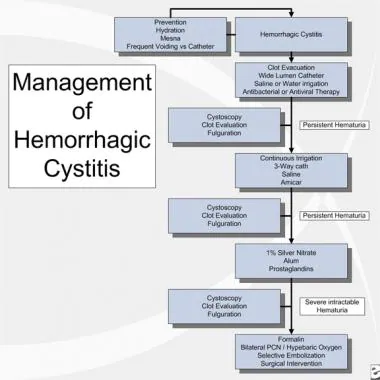
Treatment of hemorrhagic cystitis depends on the cause and severity. Key approaches include:
Supportive Care
- Increasing fluid intake to flush out the bladder
- Pain relief medications
- Bladder irrigation to remove clots and blood
Medications
- Antiviral drugs for viral infections
- Antibiotics for bacterial infections
- Mesna, a protective agent used alongside chemotherapy to prevent bladder irritation
Advanced Interventions
- Continuous bladder irrigation using a catheter in severe bleeding
- Hyperbaric oxygen therapy to promote healing in radiation-induced cases
- Surgical intervention in extreme or unresponsive cases
Early diagnosis and targeted treatment are critical to avoid complications such as chronic bladder dysfunction or anemia.
Prevention Strategies
While not all cases of hemorrhagic cystitis are preventable, certain measures can help reduce the risk:
- Preventive use of mesna during chemotherapy
- Proper hydration during and after treatments
- Antiviral prophylaxis in high-risk transplant patients
- Routine monitoring in patients receiving pelvic radiation
Conclusion
Hemorrhagic cystitis is a distressing condition, but with prompt medical attention and appropriate treatment, most patients can recover fully. For those undergoing chemotherapy or radiation, preventive strategies play a crucial role in reducing risk. Recognizing symptoms early and staying proactive with care can make all the difference in managing this condition effectively.
The list of some Hemorrhagic Cystitis medicine: