When it comes to cancer, many people are familiar with well-known types like breast or lung cancer. However, there are other forms of cancer that often fly under the radar, one of which is cholangiocarcinoma. This rare and aggressive cancer affects the bile ducts, which are the tubes that carry bile from the liver to the gallbladder and small intestine. Because it develops in the bile ducts, which are not often monitored, cholangiocarcinoma is often diagnosed at an advanced stage, making it challenging to treat.
Cholangiocarcinoma is a type of cancer that originates in the bile ducts, which are part of the digestive system. Bile is a digestive fluid produced by the liver, and the bile ducts are responsible for carrying it to the gallbladder and small intestine, where it helps digest fats. When cancer forms in these ducts, it disrupts the flow of bile, causing a variety of digestive and liver-related problems.
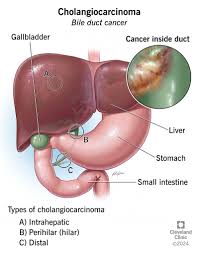
Cholangiocarcinoma is categorized into three types, depending on the location of the tumor in the bile ducts:
- Intrahepatic Cholangiocarcinoma: This type occurs in the bile ducts within the liver.
- Perihilar Cholangiocarcinoma: This occurs at the junction where the bile ducts exit the liver.
- Distal Cholangiocarcinoma: This type occurs in the bile ducts closer to the small intestine.
Risk Factors for Cholangiocarcinoma
Several risk factors may increase the likelihood of developing cholangiocarcinoma. While the exact cause is not fully understood, the following factors have been linked to an increased risk:
- Chronic liver diseases: Conditions like hepatitis B and C, cirrhosis, and primary sclerosing cholangitis can damage the liver and increase the risk of bile duct cancer.
- Bile duct abnormalities: Certain congenital conditions such as biliary cysts or Caroli’s disease can raise the risk.
- Age and Gender: Cholangiocarcinoma is more common in people over the age of 50 and is slightly more prevalent in men.
- Liver fluke infections: In some parts of the world, infections caused by liver flukes can lead to cholangiocarcinoma.
- Tobacco use and alcohol consumption: Both smoking and excessive alcohol intake are known risk factors for various types of cancer, including cholangiocarcinoma.
Symptoms of Cholangiocarcinoma
The symptoms of cholangiocarcinoma can be subtle in the early stages, which makes it difficult to diagnose early on. However, as the cancer grows, the following symptoms may occur:
- Jaundice: Yellowing of the skin and eyes, caused by a buildup of bilirubin due to bile duct obstruction.
- Abdominal pain: Pain, particularly in the upper right side of the abdomen, often occurs as the tumor obstructs the bile ducts.
- Unexplained weight loss: Significant weight loss without a clear cause is a common symptom.
- Dark urine and light-colored stools: Changes in the color of urine and stools can be signs of a bile duct blockage.
- Itchy skin: Itching is a common symptom caused by bile buildup in the body.
- Nausea and vomiting: Digestive issues may occur due to the disruption of bile flow.
Since these symptoms are common to a number of digestive and liver conditions, cholangiocarcinoma is often misdiagnosed or overlooked.
How Is Cholangiocarcinoma Diagnosed?
Diagnosing cholangiocarcinoma involves a combination of tests to confirm the presence of cancer and determine its location. These may include:
- Imaging Tests:
- CT scan and MRI: These are used to visualize the bile ducts and liver to detect any abnormalities or tumors.
- Endoscopic retrograde cholangiopancreatography (ERCP): A procedure that uses a flexible tube to examine the bile ducts and potentially obtain tissue samples for biopsy.
- Ultrasound: A non-invasive imaging test that can help identify blockages or masses in the liver or bile ducts.
- Biopsy: A biopsy, where a sample of tissue is removed for testing, is typically necessary to confirm the diagnosis of cholangiocarcinoma.
- Blood Tests: Blood tests can help assess liver function and detect elevated levels of certain substances like CA 19-9, a tumor marker that may be elevated in cases of cholangiocarcinoma.
Treatment for Cholangiocarcinoma
Treatment for cholangiocarcinoma depends on the location and stage of the cancer, as well as the patient’s overall health. The main treatment options include:
1. Surgery
If the tumor is localized and the patient is in good health, surgery may be the best option. The goal of surgery is to remove the tumor and any affected bile ducts. Depending on the tumor’s location, surgery may involve:
- Partial liver resection: Removing part of the liver affected by the cancer.
- Liver transplant: In some cases, a liver transplant may be recommended, especially for tumors located in the liver’s bile ducts.
2. Chemotherapy
Chemotherapy is often used when surgery is not an option or as adjuvant therapy after surgery. It involves using drugs to target and kill cancer cells or stop their growth. Chemotherapy may be administered intravenously or directly into the bile ducts in some cases.
3. Radiation Therapy
Radiation therapy uses high-energy beams to target cancer cells. It may be used in combination with chemotherapy or as a palliative treatment to reduce symptoms.
4. Targeted Therapy and Immunotherapy
Targeted therapies are drugs designed to target specific molecules involved in cancer growth. Immunotherapy, which helps the body’s immune system recognize and fight cancer cells, is also being studied as a potential treatment option for cholangiocarcinoma.
Prevention and Prognosis
There is no known way to prevent cholangiocarcinoma, but managing risk factors such as chronic liver disease, hepatitis infections, and maintaining a healthy lifestyle may help reduce the risk. Regular screening for people at high risk, such as those with primary sclerosing cholangitis or chronic hepatitis, can also lead to earlier detection.
The prognosis for cholangiocarcinoma depends largely on the stage at diagnosis. If caught early, when the tumor is small and localized, surgery offers the best chance for a cure. However, since it is often diagnosed in its later stages, the prognosis can be poor. Overall, the five-year survival rate for cholangiocarcinoma is lower than for many other cancers.
Conclusion
Cholangiocarcinoma is a rare but serious cancer of the bile ducts that requires prompt diagnosis and treatment. Early detection is key to improving outcomes, but due to its often subtle symptoms and late diagnosis, it can be challenging to treat. Understanding the risk factors, recognizing the symptoms, and seeking timely medical advice can make a significant difference in managing this disease. As with many cancers, research into better treatments and early detection methods continues, offering hope for future advancements in the fight against cholangiocarcinoma.
The list of some Cholangiocarcinoma medicine:
Ivosenib
Peminib
Pemitinib
LuciFutib
Pemidx
Aivodx
Lucivos
LuciPem