Mental health conditions often shape the way individuals experience life, and bipolar disorder is a prime example. Marked by intense mood swings that can range from extreme highs to deep lows, bipolar disorder affects millions of people around the world. Despite its challenges, with proper understanding and management, individuals living with bipolar disorder can lead full and meaningful lives.
Bipolar disorder is a mental health condition characterized by significant shifts in mood, energy levels, activity, and the ability to carry out daily tasks. These mood shifts are more severe than the normal ups and downs most people experience and can severely impact relationships, work, and overall well-being.
The two primary mood states associated with bipolar disorder are:
- Mania (or hypomania): A period of unusually elevated mood, high energy, and heightened activity. Hypomania is a milder form of mania.
- Depression: A period of sadness, hopelessness, and low energy, often accompanied by a loss of interest in activities once enjoyed.
Types of Bipolar Disorder
There are several types of bipolar disorder, each with unique patterns of mood episodes:
- Bipolar I Disorder: Defined by at least one manic episode, which may be preceded or followed by depressive episodes.
- Bipolar II Disorder: Characterized by a pattern of depressive episodes and hypomanic episodes, but not full-blown mania.
- Cyclothymic Disorder (Cyclothymia): Involves periods of hypomanic symptoms and depressive symptoms lasting for at least two years (one year in children and teens) but without meeting full criteria for a manic or depressive episode.
Each type requires a slightly different approach to treatment and management.
Symptoms of Bipolar Disorder
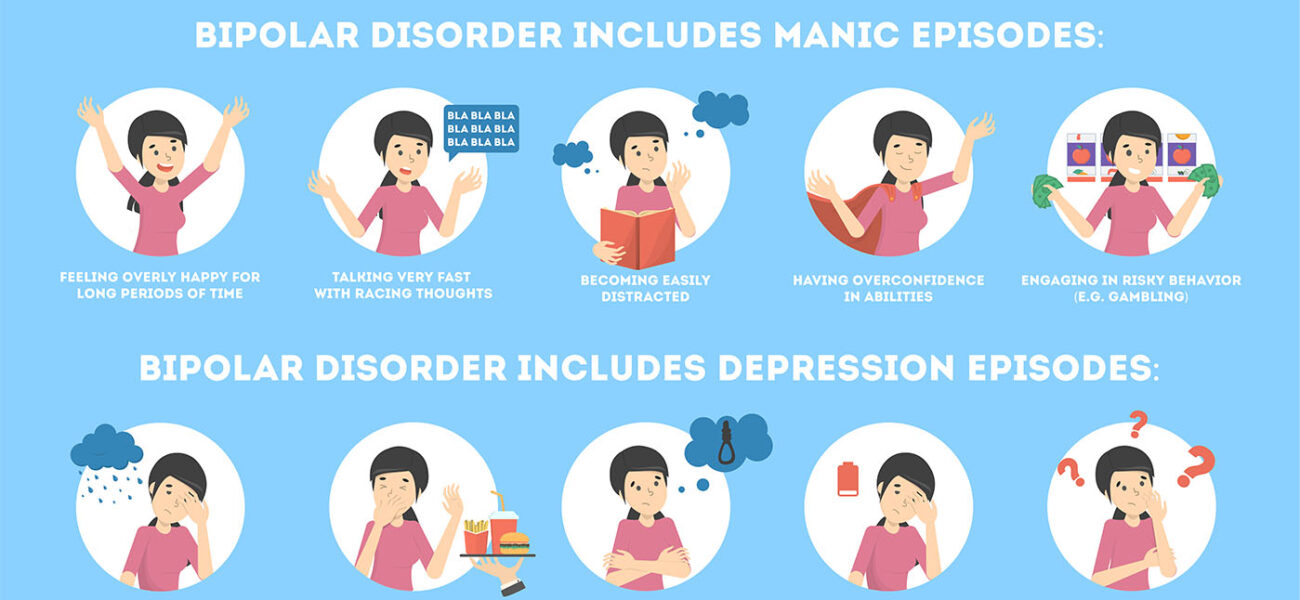
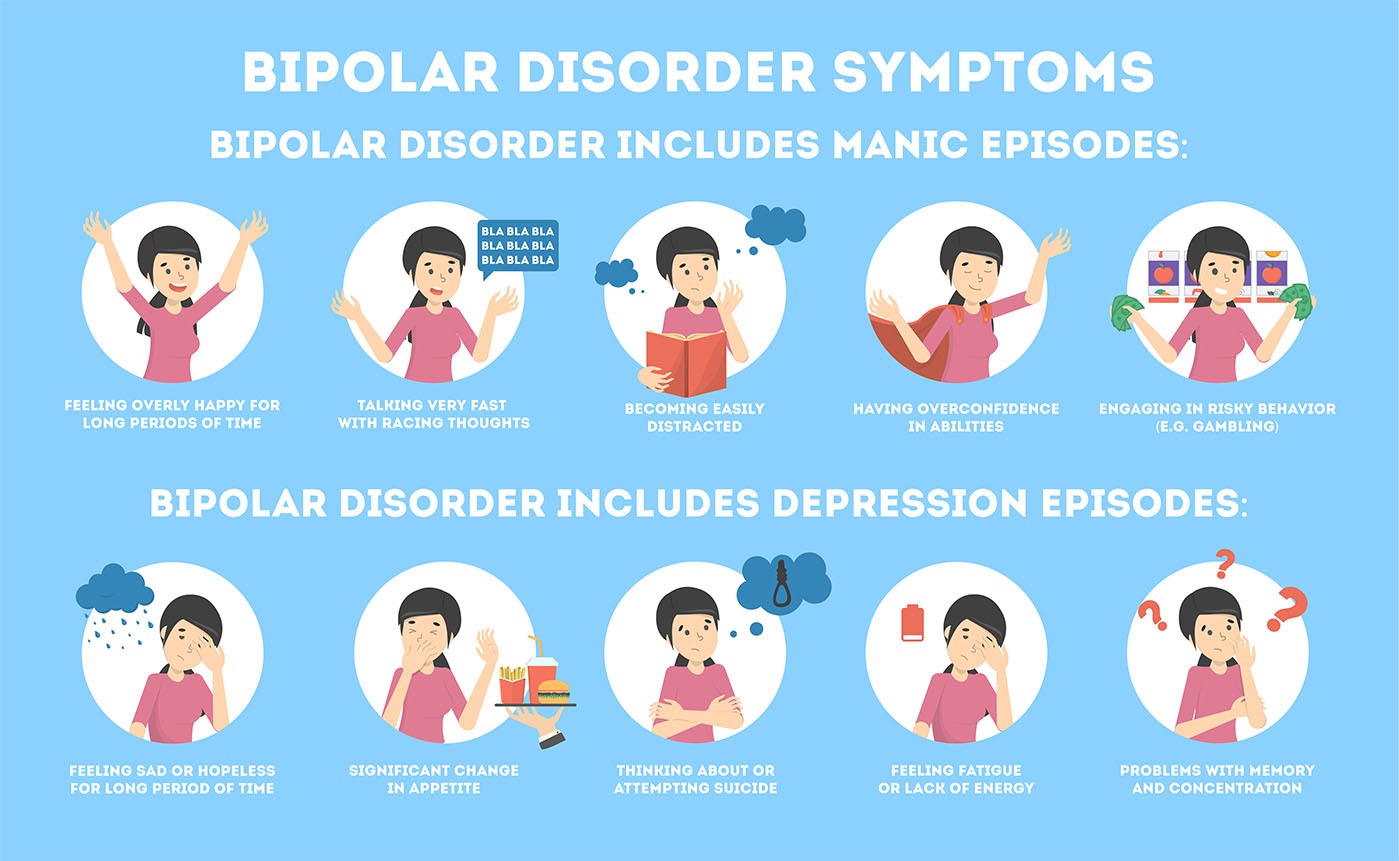
Symptoms of Mania/Hypomania:
- Increased energy, activity, or restlessness
- Euphoric or overly irritable mood
- Inflated self-esteem or grandiosity
- Decreased need for sleep
- Talking very fast or jumping from one idea to another
- Poor judgment, impulsivity, or risky behavior
Symptoms of Depression:
- Persistent sadness or emptiness
- Fatigue or lack of energy
- Feelings of worthlessness or guilt
- Difficulty concentrating or making decisions
- Changes in appetite or weight
- Thoughts of death or suicide
Mood episodes can last for days, weeks, or even longer and often vary in severity.
Causes and Risk Factors
The exact cause of bipolar disorder is not fully understood, but several factors likely play a role:
- Genetics: A family history of bipolar disorder increases the risk.
- Brain structure and function: Differences in brain chemistry and structure have been noted in individuals with bipolar disorder.
- Environmental triggers: Stressful events, trauma, substance abuse, or major life changes can trigger or worsen mood episodes.
It’s important to note that no single factor causes bipolar disorder on its own—it’s often the result of a combination of influences.
Diagnosing Bipolar Disorder
Bipolar disorder is diagnosed through a comprehensive evaluation that may include:
- Detailed interviews about personal and family mental health history
- Mood charting to track patterns over time
- Psychological assessments
- Physical exams to rule out other medical conditions
Accurate diagnosis is crucial because bipolar disorder is often mistaken for other mental health conditions, such as depression alone.
Treatment and Management
While bipolar disorder is a lifelong condition, effective treatment can help manage symptoms and improve quality of life. Treatment often includes:
- Medications: Mood stabilizers, antipsychotics, and antidepressants are commonly prescribed.
- Psychotherapy: Cognitive behavioral therapy (CBT), interpersonal therapy, and psychoeducation can be beneficial.
- Lifestyle adjustments: Regular sleep patterns, stress management techniques, healthy eating, and exercise contribute to stability.
- Support systems: Family support, peer groups, and counseling can make a significant difference.
In some severe cases, treatments like electroconvulsive therapy (ECT) may be considered.
Living with Bipolar Disorder
Managing bipolar disorder involves more than just medical treatment; it requires building a healthy lifestyle and strong support networks. Here are some strategies that help:
- Recognize early warning signs: Knowing the signs of an impending episode can prompt early intervention.
- Stick to a treatment plan: Taking medication as prescribed and attending therapy sessions consistently is vital.
- Maintain routines: Consistent daily routines help stabilize mood swings.
- Avoid alcohol and drugs: These substances can trigger or worsen mood episodes.
- Practice self-care: Mindfulness, hobbies, and regular relaxation can help balance emotions.
With commitment and support, many individuals with bipolar disorder successfully manage their symptoms and lead rewarding lives.
Final Thoughts
Bipolar disorder is a complex but manageable mental health condition. Awareness, early intervention, and continuous care can make a profound difference in the journey toward stability and fulfillment. By understanding the nature of bipolar disorder and fostering a supportive environment, society can help reduce stigma and empower those affected to thrive.
If you or someone you know is experiencing symptoms of bipolar disorder, seeking help from a mental health professional is an important first step. Remember, treatment works—and recovery is possible.
The list of some Bipolar Disorder medicine:
Frenia
Queta
Queta XR
Ariprazole
Resco
Residon
Risdon
Risperdex
Sperid
Aripra
Ariprex
Quiet
Q-Fit