Melanoma is a type of skin cancer that develops from melanocytes, the cells responsible for producing melanin — the pigment that gives skin its color. Although it accounts for a small percentage of skin cancer cases, melanoma is the most dangerous because it can spread quickly to other parts of the body if not caught early.
What Causes Melanoma?
The primary cause of melanoma is exposure to ultraviolet (UV) radiation, either from the sun or artificial sources like tanning beds. UV rays damage the DNA in skin cells, leading to abnormal cell growth. However, melanoma can also develop on areas of the body that are rarely exposed to the sun, suggesting that other factors, including genetics and immune system function, play a role.
Risk factors for melanoma include:
- Excessive sun exposure and sunburns, particularly during childhood
- Fair skin, freckles, light hair, and light-colored eyes
- Family history of melanoma
- Having many moles or unusual moles (dysplastic nevi)
- Weakened immune system
- Older age, although melanoma is also one of the most common cancers in young adults
Types of Melanoma
There are several types of melanoma, each with distinct features:
- Superficial Spreading Melanoma: The most common form, often appearing as a flat or slightly raised discolored patch with irregular borders.
- Nodular Melanoma: Grows rapidly and often appears as a firm, dome-shaped bump.
- Lentigo Maligna Melanoma: Typically develops in older adults on sun-damaged skin, particularly on the face and neck.
- Acral Lentiginous Melanoma: A rare type that appears on the palms, soles, or under the nails, more common in people with darker skin.
Symptoms to Watch For
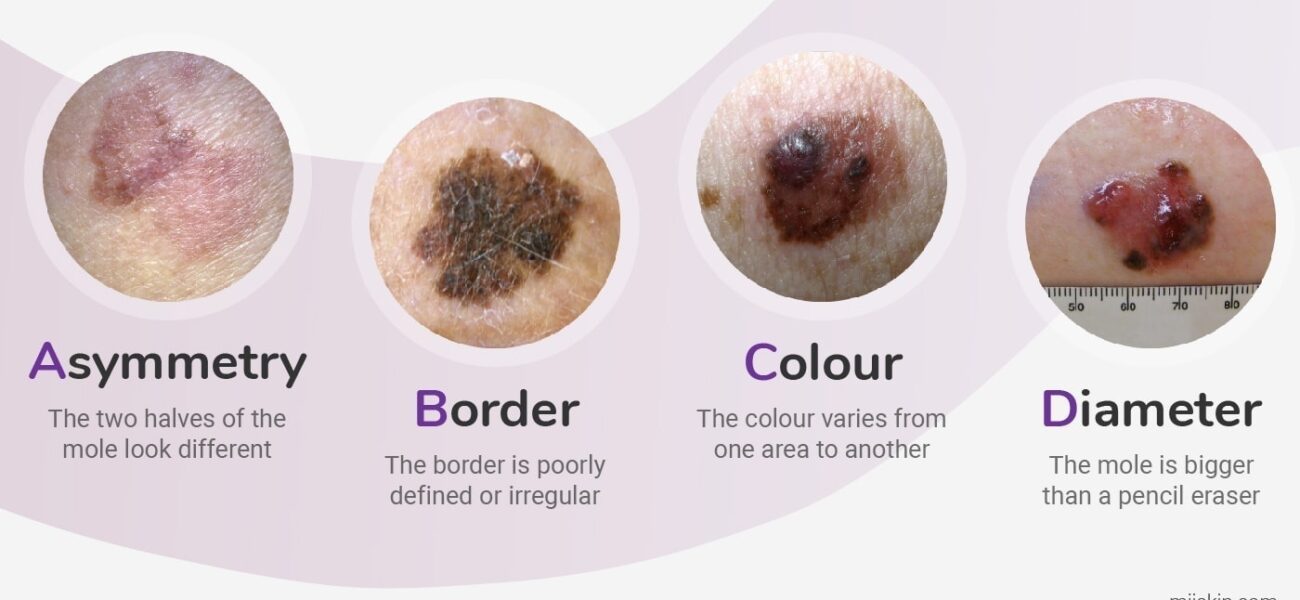
Melanoma can appear anywhere on the body. It’s crucial to know the signs, often summarized by the “ABCDE” rule:
- Asymmetry: One half of the mole doesn’t match the other.
- Border: Edges are irregular, ragged, or blurred.
- Color: Uneven colors including shades of black, brown, tan, and sometimes white, red, or blue.
- Diameter: A growth larger than 6 millimeters (about the size of a pencil eraser).
- Evolving: Any change in size, shape, color, or symptoms such as itching or bleeding.
Other warning signs may include a new spot on the skin or a sore that doesn’t heal.
How Is Melanoma Diagnosed?
If a suspicious spot is found, a dermatologist may perform a skin biopsy — removing a sample of the lesion to examine it under a microscope. If melanoma is confirmed, further tests such as imaging scans (CT, MRI, PET) or sentinel lymph node biopsy may be done to determine if the cancer has spread.
Treatment Options
The choice of treatment depends on the stage of melanoma and other factors, such as the patient’s overall health:
- Surgical Removal: In early stages, surgery to remove the tumor and some surrounding healthy tissue may be curative.
- Immunotherapy: Treatments that boost the body’s immune response to cancer cells.
- Targeted Therapy: Drugs that specifically attack cancer cells with certain genetic mutations.
- Chemotherapy: May be used when other treatments are not effective.
- Radiation Therapy: Sometimes used after surgery or to treat melanoma that has spread.
Advances in immunotherapy and targeted treatments have significantly improved survival rates for people with advanced melanoma.
Prevention Tips
While not all melanomas can be prevented, you can reduce your risk by following these tips:
- Limit sun exposure, especially between 10 a.m. and 4 p.m.
- Wear sunscreen with at least SPF 30 daily, even on cloudy days.
- Avoid tanning beds and sunlamps.
- Wear protective clothing, including hats and sunglasses.
- Regularly check your skin for new or changing spots and see a dermatologist for annual skin exams.
Early detection is key. When caught at an early stage, melanoma is highly treatable.
Conclusion
Melanoma is a serious but often preventable and treatable form of skin cancer. Awareness of risk factors, symptoms, and the importance of early diagnosis can make a life-saving difference. Protecting your skin from UV rays and staying alert to changes in your skin are some of the best defenses against this dangerous disease.
The list of some Melanoma medicine:
LuciCob
LuciBinim
Tramedx
Luciencor
Bratodx
Mektodx
Lucitram
Cotellic
INTRON A