Undergoing a stem cell or bone marrow transplant can be a life-saving procedure for individuals battling leukemia, lymphoma, and other blood-related disorders. However, recovery after transplantation doesn’t always go smoothly. One of the most challenging complications faced by patients post-transplant is Chronic Graft-Versus-Host Disease (cGVHD). This complex condition can significantly impact a patient’s quality of life, making awareness, early diagnosis, and effective management essential.
Chronic Graft-Versus-Host Disease occurs when the donor’s immune cells (the graft) attack the recipient’s tissues (the host) following an allogeneic stem cell transplant. While some level of immune response is expected—and even desired to prevent cancer relapse—cGVHD represents an unwanted, prolonged immune attack that can involve multiple organs.
Unlike acute GVHD, which typically appears within the first 100 days post-transplant, cGVHD often develops later—months or even years after the procedure—and can last for a long time, sometimes becoming a chronic condition.
Why Does cGVHD Happen?
The immune system is designed to distinguish between the body’s own cells and foreign invaders. In a stem cell transplant, the donor’s immune system is essentially “rebooting” the patient’s system. However, sometimes these new immune cells misidentify the patient’s body as foreign and begin attacking it. This misdirected immune response can lead to inflammation and tissue damage, resulting in cGVHD.
Factors that increase the risk of cGVHD include:
- Older age of donor or recipient
- A mismatch in donor-recipient genetic markers (HLA)
- Previous acute GVHD
- Use of peripheral blood stem cells instead of bone marrow
Symptoms and Affected Organs
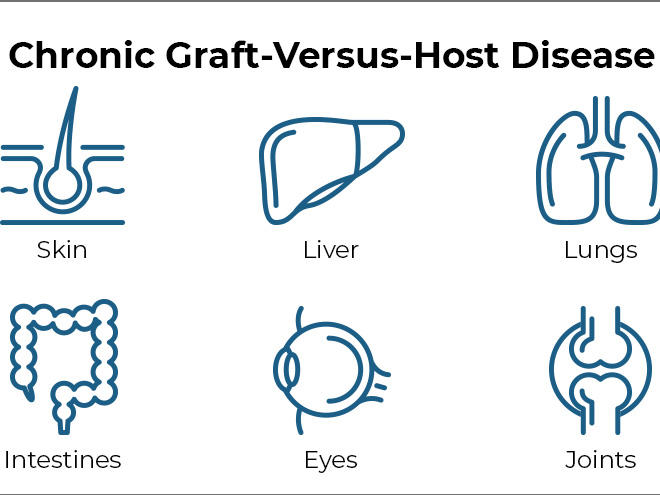
cGVHD can range from mild to severe and may affect one or multiple organs. Commonly affected areas include:
1. Skin
- Dryness, rash, thickening, or hardening of the skin (similar to scleroderma)
- Changes in pigmentation
- Tight or shiny skin that restricts movement
2. Eyes
- Dry, gritty sensation
- Sensitivity to light
- Redness or blurred vision
3. Mouth
- Dryness or pain
- White patches or ulcers
- Difficulty swallowing or changes in taste
4. Lungs
- Coughing or shortness of breath
- Inflammation that can lead to chronic lung disease (bronchiolitis obliterans)
5. Liver
- Elevated liver enzymes
- Jaundice in severe cases
6. Gastrointestinal Tract
- Nausea, diarrhea, or abdominal pain
- Weight loss and malnutrition
Other areas like joints, muscles, and genital tract may also be involved. In severe cases, cGVHD can be debilitating and affect daily functioning.
Diagnosis of cGVHD
There is no single test to confirm cGVHD. Diagnosis typically involves:
- Clinical evaluation of symptoms
- Biopsy of affected tissue
- Imaging or pulmonary function tests for lung involvement
- Blood tests to assess liver and immune function
The National Institutes of Health (NIH) has established criteria to help standardize the diagnosis and grading of cGVHD based on organ involvement and severity.
Treatment and Management
The goal of treatment is to control the immune attack while minimizing side effects. Common treatment strategies include:
1. Corticosteroids
- Often the first line of defense
- Help reduce inflammation but may have long-term side effects
2. Immunosuppressive Agents
- Drugs like tacrolimus, sirolimus, or cyclosporine to dampen immune activity
- Ruxolitinib and other targeted therapies are also being explored
3. Supportive Care
- Lubricating eye drops, mouth rinses, and skin care
- Physical therapy to maintain mobility
- Nutritional support
4. Clinical Trials
- New treatments are constantly being evaluated to improve outcomes and reduce toxicity
Treatment can be long-term, and tapering off medication must be done slowly and carefully under medical supervision.
Living with cGVHD
Coping with cGVHD can be both physically and emotionally demanding. However, many patients lead fulfilling lives with appropriate care and support. Key steps include:
- Regular follow-up visits with the transplant team
- Early recognition of symptoms to adjust treatment
- Patient education and self-care
- Support groups and mental health support to manage stress and anxiety
Patients are encouraged to stay active, eat a balanced diet, and maintain good hygiene to reduce infection risk.
Hope on the Horizon
Medical advances have significantly improved the understanding and treatment of cGVHD. With newer therapies, better monitoring tools, and comprehensive patient care plans, the prognosis for many patients has improved. Ongoing research continues to bring hope for more effective, targeted treatments with fewer side effects.
Conclusion
Chronic Graft-Versus-Host Disease is a complex condition that can emerge after a life-saving transplant. While challenging, it is manageable with timely intervention, multidisciplinary care, and strong patient support. Through awareness, research, and personalized treatment, those affected by cGVHD can continue to thrive and embrace life beyond their transplant journey.
The list of some Chronic Graft-Versus-Host Disease medicine:
LuciBelu